
🌸 Where are we in Quantum Computing?
A walkthrough to understand why this field matters today (2025)
Over the past few years, quantum computing has gone from being “that weird theory from physicists” to becoming a space where engineering, programming, mathematics, chemistry, electronics, and even algorithm design converge… along with students like you. And although we are still far from having quantum machines capable of solving all the world’s problems, we are living a real technological wave, with companies, labs, and governments investing billions to build this technology from scratch.
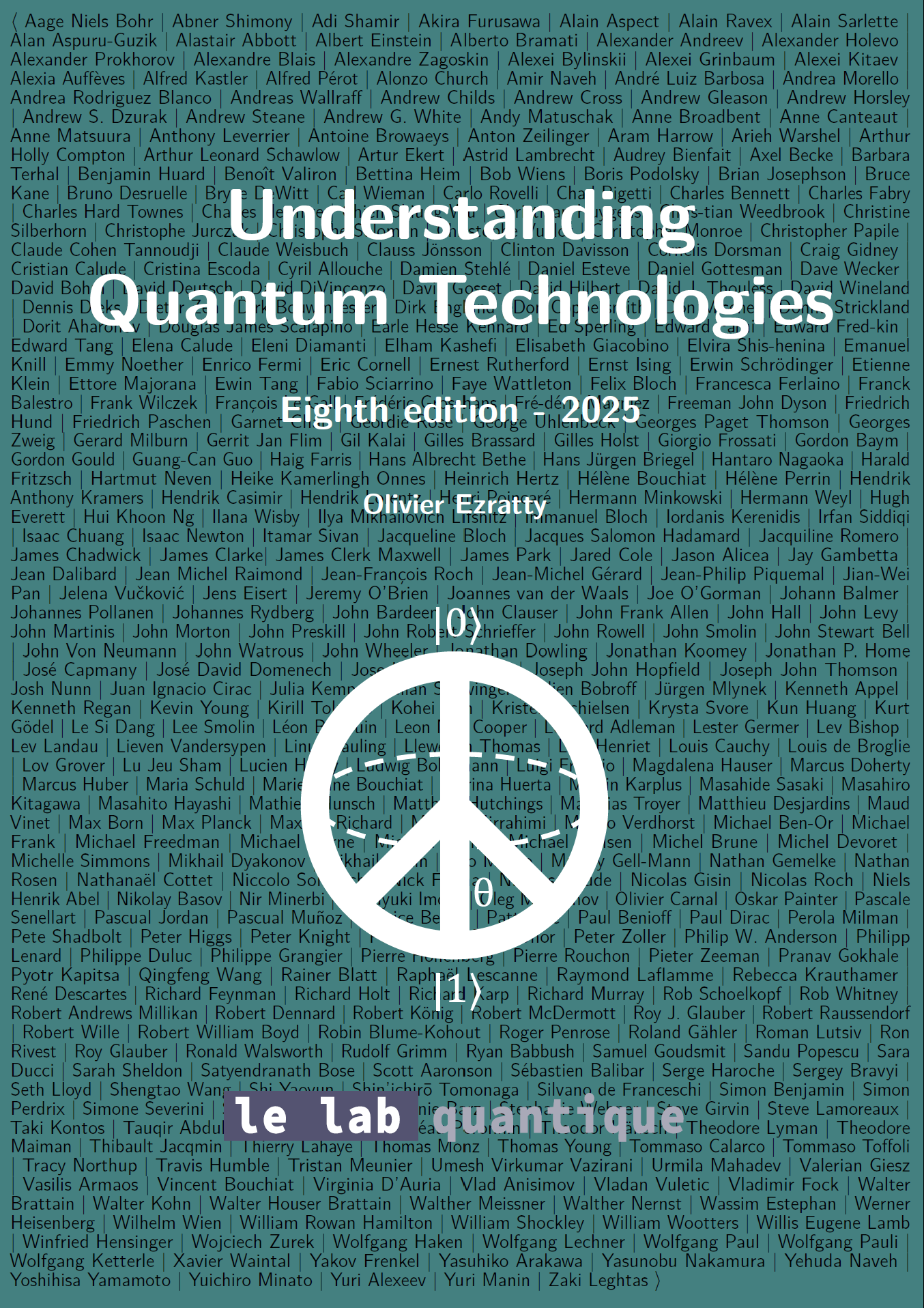
In this post I want to tell you what’s happening, why this field is exploding right now, and how you can enter this story, taking as reference the book Understanding Quantum Technologies by Olivier Ezratty.
🌊 The new Quantum Technology Wave
Today we talk about a “2nd quantum revolution.” The 1st one, in the early 20th century, changed the world with lasers, semiconductors, and magnetic resonance imaging. The 2nd revolution, the one happening now, consists of controlling quantum systems individually (a scientific counterpoint of atom by atom, photon by photon) to use them as tools for information.
We no longer observe quantum phenomena: now we manipulate them to compute.
This opens the door to new capabilities: simulating complex molecules, designing more efficient algorithms for certain problems, among others.
🚀 Why Quantum Computing Now?
Ezratty explains it clearly: it’s not that physicists suddenly woke up wanting to build quantum computers. Several trends converged:
1. The limits of classical computing
Moore’s Law no longer advances as it once did. Transistors are so small that we are approaching the scale where electrons “sneak through” due to undesired quantum effects.
2. New fabrication techniques
Companies like IBM, Google, and Intel have learned to build superconducting chips, photonic microstructures, and cryogenic systems capable of keeping qubits alive for milliseconds.
3. A growing ecosystem
Startups, educational programs, research centers, public–private collaborations, investment funds, and partnerships between universities are driving explosive growth. This is one of the few fields where hardware, software, theory, and applications are advancing simultaneously.
🎯 The Promise (and Reality) of Quantum Computing 🎯
You’ve probably heard phrases like “quantum computers will solve everything.”
Spoiler: nope.
But it’s also not just talk. The real promise is more concrete:
- Quantum computers will not replace classical ones.
- They will be used as specialized accelerators.
- They will work alongside CPUs and GPUs in hybrid systems.
Their advantage is not “being faster,” but processing information differently: superposition, interference, and entanglement.
What does a Quantum Computer look like inside?
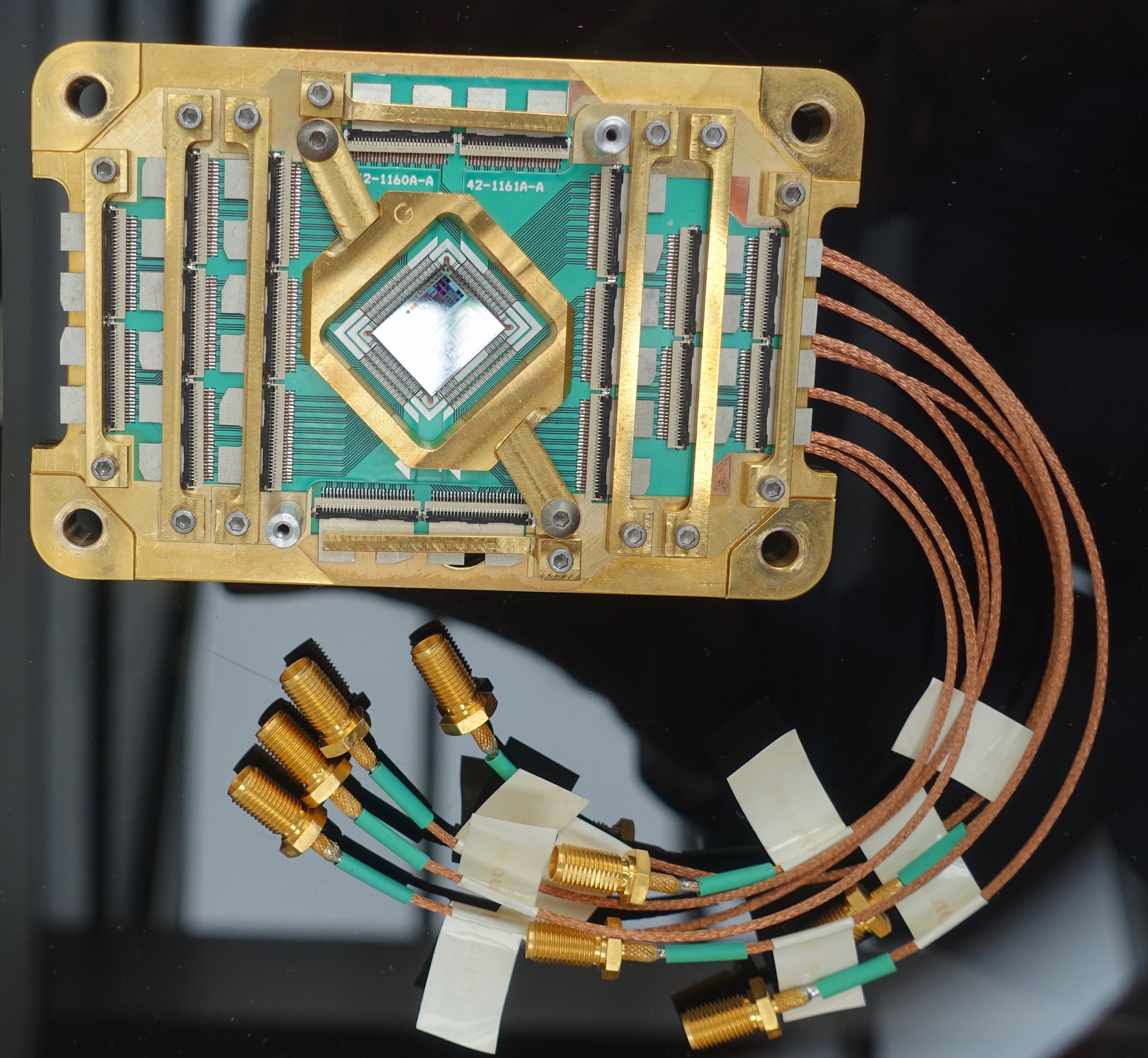
In a way, a quantum computer is half machine, half extreme-physics lab 😂. On the outside, it may look like a futuristic fridge, but inside it can contain:
🟣 Qubits
- trapped ions,
- photons,
- cold atoms,
- superconducting circuits.
Each technology shines in something different… coherence, fidelity, scalability.
© D-Wave Systems Inc.
🟣 Electronic and Optical Controllers
These devices send the pulses that manipulate the qubits. Ezratty describes them as the true “soul” of the quantum computer.
🟣 A Classical Computer That Orchestrates Everything
It controls compilation, pulses, synchronization, result readout, and post-processing. Quantum computers are always hybrid.
🧪 More Qubits ≠ More Power: The Real Challenge 🧪
Ezratty insists that the important thing is not the number of qubits, but:
- fidelity,
- connectivity,
- coherence,
- gate times,
- total circuit error.
We’ll talk about all of this another time. For now, what matters is that most machines today are in the NISQ era: Noisy Intermediate-Scale Quantum.
This is where benchmarking, error mitigation, and the looooong road toward fault tolerance come in.
🛠️ What Can We Do Today with Quantum Computers? 🛠️
Although we haven’t reached “advantageous quantum computing” yet, we can:
- program circuits (Python, Qiskit, Braket, Cirq…),
- run small algorithms on real hardware,
- explore variational algorithms,
- simulate small molecules,
- see how this technology is built from scratch.
This is one of the few fields where you can learn at the same time
that experts are creating the real technology.
🌱 What’s Next? 🌱
What’s coming in the next few years:
- Better characterization and benchmarking.
- Small demonstrations of fault tolerance.
- “Niche” use cases with real advantage.
- Stronger integration with HPC and cloud.
No “instant magic,” no “breaking RSA tomorrow.” But yes, a hybrid, interdisciplinary future full of opportunities.
But for today’s post, we’ll stop here: understanding the why now, the real challenges, the physical architecture, and where quantum computing is headed.
I want you to know that this ecosystem is only getting started, and you can be part of it.
📚 Main Reference 📚
Ezratty, O. (2025). Understanding Quantum Technologies (8th ed.). Olivier Ezratty.
📢 Invitation 📢
I’ll be talking about all these topics (and much more) at the Second Peruvian School of Quantum Computing, held in Peru from December 1 to 7. Some talks will be in Spanish, other in English.
My talk, titled “Perspectives of Quantum Computing”, will take place on
Tuesday, December 2, from 09:00 to 10:00 (UTC-5).
If you’re interested in learning quantum computing from scratch, meeting Latin American researchers, experiencing a full week of workshops, talks, and activities, and joining a community that’s growing at full speed, I invite you to join the school. It’s a safe, friendly, diverse space designed for everyone to learn.
💜 I’ll see you there! ✨
 <Quantum|Chamitas>
Leave a comment